
🥋 Too Many Mind- The Day Surgery Stopped Being Rational The Neurobiology of Surgical Presence
- Andre Chen
- Mar 5
- 4 min read
Updated: Apr 12
“Great surgery does not happen when the mind is full of thoughts.
It happens when training replaces thinking, and presence replaces fear.”
Good morning everyone.
I was at home after an exhausting week of implant surgeries, sitting on the sofa (which is a rare thing these days).
I was watching the movie The Last Samurai , cool movie … very old … and what strikes me is when a particular scene immediately caught my attention: a samurai duel where one samurai explains to Tom Cruise’s character why he keeps failing.
“Too many mind. You think sword. You think audience. You think enemy.
Too many mind.”
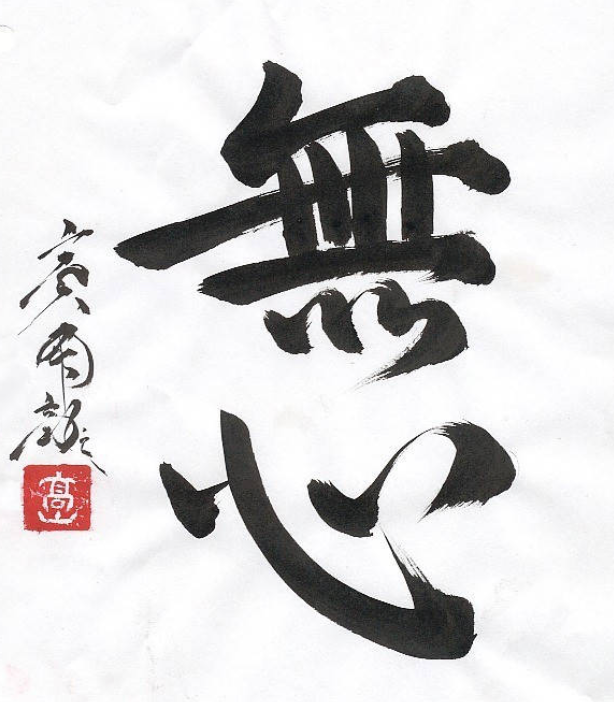
“No mind.”
At that exact moment, I immediately remembered an implant surgery in Madeira.
Not as a poetic Zen concept. But as a very real surgical state. Something unique had happened during that case: I had moved from a state of many minds to a state of no mind.
Surgery ON —- 🎓 When I started, I was in rational mode
Structured planning. The CBCT fully visualized in my head. The drilling sequence defined.
I was explaining every step to my colleague.
Comfortable. Didactic. Analytical. Professor mode.
Everything was going as expected… until it wasn’t.
Implants without stability. A sinus perforation.
Positioning problems, an uncomfortable patient.
⚠️ The moment the plan failed
The osteotomy was not entering the ideal point.
The implants were not gaining primary stability.
Liliana started sighing… Jeanne was getting impatient… and the patient began to feel uneasy.
This is the moment where most surgeons fragment mentally.
The internal noise starts:
“They are watching me.” “This cannot fail.”
“I need to fix this quickly.”
Too many minds.
But what happened to me was different.
(And I must say: I didn’t fully understand it at the time. I actually studied what had happened afterward. What follows is my medical interpretation of that phenomenon.)
🧠 “No Mind” (Mushin)
The concept comes from Zen: Mushin — a mind without distraction, without ego, without noise.
It is not the absence of thinking.
It is the absence of interference.
It is when:
the sword becomes an extension of the body,
the body becomes an extension of intention,
and action emerges without hesitation.
And this applies powerfully to implant dentistry.
When you are performing surgery and thinking:
“Am I too buccal?”
“Is the bone enough?”
“What if the implant lacks stability?”
“Will the patient swell?”
“Would another surgeon do it differently?”
That is too many mind. But when you have already mastered: biology, anatomy, torque control, prosthetic positioning, possible complications… you enter a different state.
Not recklessness.
Integration.
🎯 Don’t think. Focus.
Focus does not mean forcing concentration.
Focus means simplifying.
It means being completely present in:
that incision,
that drilling motion,
that millimeter.
No past.
No future.
Only that moment.
🧠 What happened in my brain
It wasn’t a conscious decision. It was a neural reorganization. As stress increased, the sympathetic nervous system activated: adrenaline, noradrenaline.
But instead of panic, something different occurred.
1️⃣ Reduced activity in the prefrontal cortex
The center responsible for judgment, internal dialogue, and social self-awareness became less dominant. The “self” disappeared from the equation.
A key moment: until then Liliana had been passing me the instruments. After that shift, I don’t even remember that happening anymore. According to her, I simply took control of everything.
2️⃣ Procedural memory took over
The basal ganglia, cerebellum, and sensorimotor circuits assumed control.
Years of surgical training began executing automatically, without internal narration.
I didn’t think: “I will change the angulation.”
I simply changed it.
3️⃣ The hippocampus altered time perception
Time appeared to slow down. This phenomenon is described in extreme performance states: temporal perception changes when attention is completely focused on the present.
4️⃣ Functional tunnel attention
The amygdala filtered irrelevant stimuli.
I stopped hearing the room.
I stopped hearing the noise.
Only four things existed:
the maxilla, the axis, the bone density,
the solution.
🏎️ The same phenomenon in elite sports
This state is not exclusive to surgery.
Formula 1 drivers like Ayrton Senna described moments where everything slowed down during a qualifying lap. The car felt like an extension of the body, time expanded, and decisions occurred before verbal thought.
Athletes like Michael Jordan described similar experiences: games where the basket seemed larger and the crowd noise disappeared.
Neurobiologically, the pattern is the same:
Reduced prefrontal activity.
Activation of automatic circuits.
Absolute focus on the present.
This is not mysticism.
It is trained integration under pressure.
🔥 The outcome in Madeira
The surgery that started unstable ended solid.
Not because I forced it.
But because I reduced, simplified, and integrated.
At the end came intense physical exhaustion — the natural consequence of prolonged sympathetic activation.
But something else was very clear:
absolute control.
(And of course, dinner at Polar was epic. Plenty of espetadas and bolo do caco.)
🏥 Days later, with Margarida, it happened again
During an immediate loading case I felt the same state. Exhaustive planning. Deep prosthetic discussion.
But at the moment of execution:
internal silence.
There was no static guide.
No dynamic navigation.
It was internalized three-dimensionality.
The plan was already inside me.
I didn’t need to think.
⚖️ Technology vs Integration
Surgical guides are extraordinary.
Dynamic navigation is impressive.
But when the case diverges from the software…
when the bone does not correspond to the digital plan…
that is where the difference appears between:
dependence and integration.
Mushin is not against technology.
It goes beyond it.
🎯 For the next generations
Mushin is not improvisation.
Without technical foundation → chaos.
With technical foundation → adaptive excellence.
If you want to reach this level:
Study deeply.
Plan obsessively.
Train until knowledge becomes internalized.
Learn to regulate stress.
Leave your ego outside the operating room.
And when the plan begins to fail…
breathe. simplify. silence the noise. focus.
🔥 The final truth
Mushin does not appear when everything goes well.
It appears when everything threatens to fail.
And if at the end you feel:
deep exhaustion, mental clarity,
true control…
then it wasn’t luck.
It was trained neurobiology.
It was integration.
It was surgery performed in a state of No Mind.


Comments