
Choose Your Weapon: Implant Dentistry Isn’t One-Size-Fits-All
- Andre Chen
- Aug 3, 2025
- 2 min read
Updated: Sep 10, 2025
In 1977, Xerox aired a now-legendary commercial featuring Brother Dominic — a humble monk tasked with reproducing a handwritten manuscript 500 times. Faced with an impossible demand, Dominic doesn’t panic. Instead, he heads to a Xerox copier. Minutes later, he returns with flawless copies. The amazed friars proclaim:
“It’s a miracle!”
But the real miracle wasn’t divine intervention — it was using the right tool for the job.
I’m often asked:
“What’s your protocol for the posterior mandible?”
“What’s your go-to technique in the posterior maxilla?”
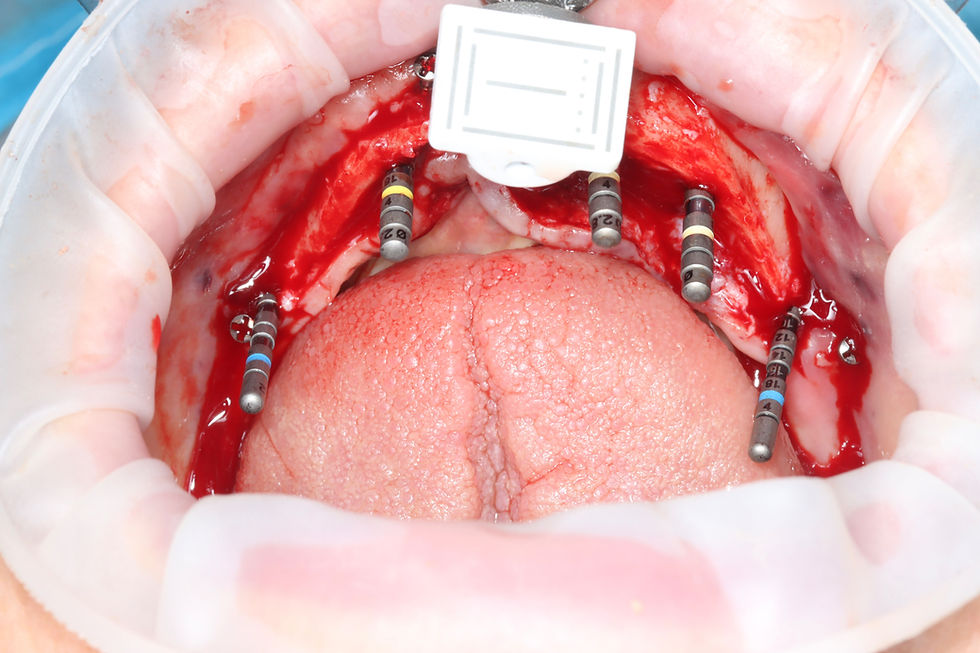
And honestly? There is no singular protocol. Each patient is unique. Each case demands its own considerations — biologic, anatomic, emotional, even financial.
That doesn’t mean we act without structure. It means we develop a mental framework flexible enough to adapt — a system that respects individuality without sacrificing predictability.
a mental map, tailored to the anatomy, the biology, and the person in front of us.
I knew a dentist who used only one technique: subcrestal conical implants with cementable solutions. Every case was bent to fit that mold — bone augmented, tissue grafted, even central incisors left unrestored to “protect the beauty” of his surgical result. Was it stable? Sometimes. Was it patient-centered? Hardly.
No matter if the terrain wasn’t right. No keratinized tissue? No vertical height? No problem — he’d simply create the terrain. Bone augmentations became the norm. Soft tissue grafts, standard. Patients were made to adapt to the technique — not the other way around. All in the name of beautiful photos and surgical pride and the ego oh showing that in wats app groups……
But at what cost?
There’s a better way. A more ethical way. A way that uses multiple tools, not just one. A way that adapts the technique to the patient, not the other way around.
From ceramic implants to 4 mm titanium fixtures, from subcrestal to supracrestal positioning — the key is versatility.
Not every case needs a miracle.
Just the right weapon.
I’m
Comments